
Welcome to Science at Green Lane Primary Academy
“Science is not just about finding answers – it’s about sparking curiosity, asking questions, and discovering the wonders of the world around us.”
Why We Love Science
At Green Lane, our aim is to foster in all young people a lifelong curiosity and interest in science. Our curriculum provides opportunities for varied, systematic investigations, enabling children to develop both substantive knowledge (scientific concepts and facts) and disciplinary knowledge (skills in working scientifically). This equips them to ask and answer meaningful questions about the world around them. Science is more than a subject – it’s a way of thinking and exploring the world. We believe every child is a natural scientist, full of curiosity and questions. Our science curriculum nurtures this curiosity by encouraging children to investigate, experiment, and make discoveries through hands-on learning. Through engaging lessons, practical investigations, and learning about inspirational scientists linked to each topic — such as Charles Darwin, Mary Anning, Thomas Edison, and Mae Jemison — we inspire children to see themselves as scientists today and problem-solvers of tomorrow.
What Learning Looks Like
In the Early Years Foundation Stage (EYFS), children lay the foundations for science through the area of learning called ‘Understanding the World’. They are encouraged to explore, observe, and ask questions about the world around them, whether it’s noticing seasonal changes, comparing materials, or caring for plants and animals. These first experiences nurture children’s natural curiosity and develop the key skills of observation, exploration, and discussion. This builds the groundwork for scientific enquiry, preparing children for the more formal study of science in the National Curriculum, where they will investigate concepts in greater depth as they move into Key Stage 1.
The acquisition of key scientific knowledge is central to our science lessons. Children develop both substantive knowledge (concepts and facts) and disciplinary knowledge (skills in working scientifically) through carefully planned teaching and enquiry. Progression in scientific enquiry skills is mapped across year groups, ensuring increasing depth, challenge, and independence. Lessons have a clear focus, combining knowledge with hands-on investigations and opportunities to apply enquiry skills. Teachers are equipped with secure subject knowledge, enabling them to deliver high-quality learning and address common scientific misconceptions with confidence.
Talking, Exploring and Doing
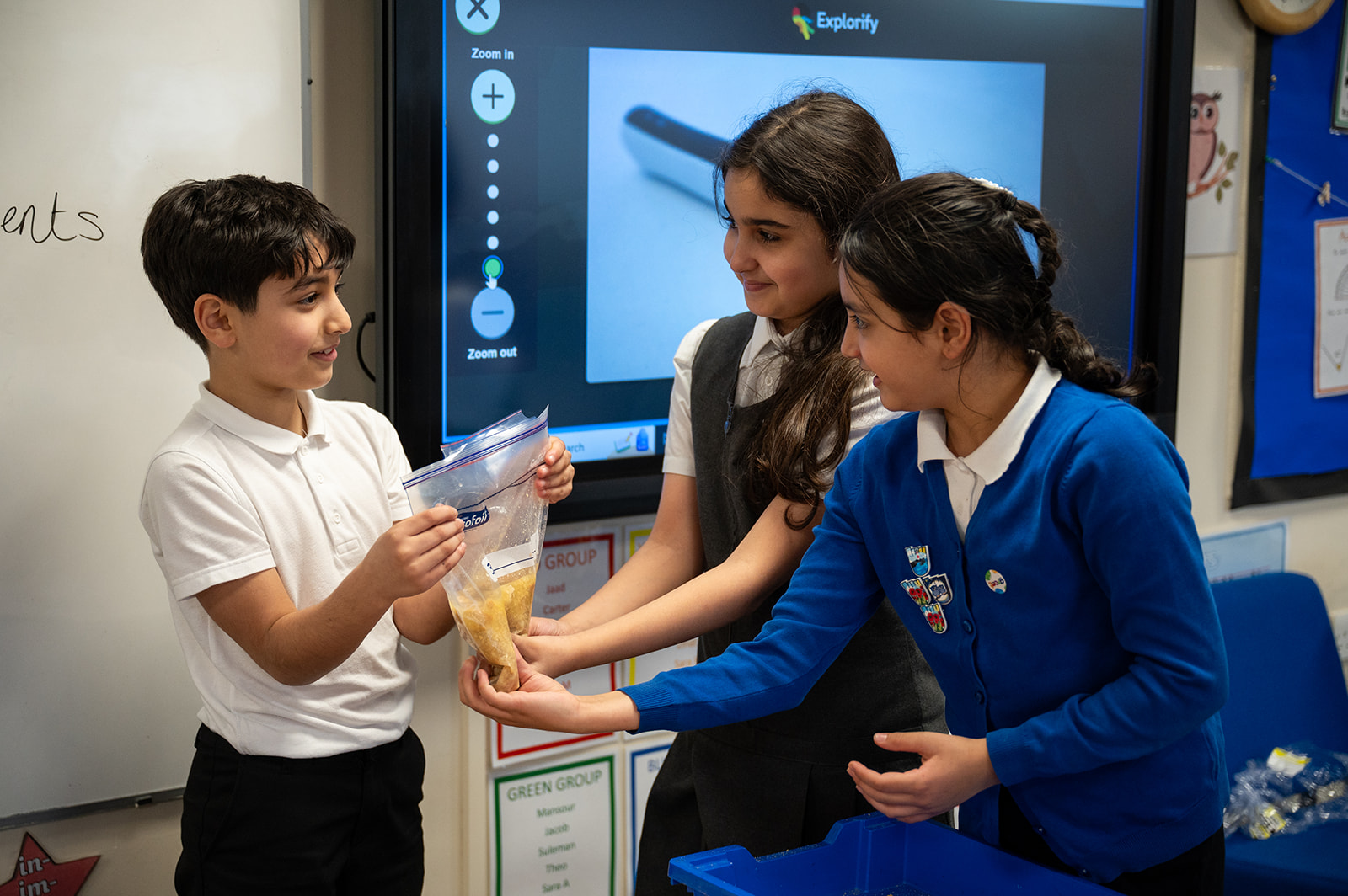
Our approach places a strong emphasis on practical investigations, where children are encouraged to apply their enquiry skills in meaningful contexts. Each topic introduces inspirational scientists, showing their role, relevance, and impact, and helping children see how science connects to real-world jobs and discoveries. From exploring our outdoor environment to studying the wider world, we give children opportunities to engage with science beyond the classroom. Science at Green Lane thrives on discussion, exploration, and the joy of asking ‘What if…?’ which makes learning active, engaging, and memorable.
What Makes Us Special
Science at Green Lane is special because it connects classroom learning to real life. We believe that science should be meaningful, hands-on, and full of discovery. By celebrating the wonder of nature, the excitement of asking questions, and the joy of making discoveries, we ensure that children see science as relevant to their lives. Through whole-school and parental engagement, we build a strong community of curious learners who are motivated to explore and understand the world around them.
How We Know Children Are Succeeding
Progress in science is measured by a child’s ability to know more, remember more, and explain more. Teachers use key questioning, ongoing assessment, and end-of-unit tests to monitor progress. Consistency across the school is supported through the use of scientific vocabulary, which is displayed and embedded within lessons. Confident learners, secure in their scientific knowledge and enquiry skills, are curious, motivated, and able to recognise the relevance and importance of science in real-world contexts.
Key Documents
Local Places For Families To Explore Together
| Attraction & Website Link | Description |
| Dorman Museum | Exhibits covering natural science, space, geology, local flora & fauna, and interactive discovery spaces. |
| Wynyard Planetarium | Planetarium and observatory with star shows, night-sky viewing and astronomy outreach events. |
| Teesside Astronomy | Astronomy education centre with talks, night-sky sessions, and family events. |
| Transporter Bridge | Explore the engineering, mechanics and science of Middlesbrough’s iconic bridge. |
| Teessaurus Park | Outdoor sculpture park of large steel dinosaurs — linking art, engineering and play. |
| Teesmouth National Nature Reserve | Estuary reserve with dunes, mudflats, marshes — rich in ecology, wildlife science and conservation. |
| Teesmouth Field Centre | Offers field study visits on ecology, geology, and coastal science for families and schools. |
| Life Science Centre | Large interactive science centre with exhibits, planetarium, experiment zones and making studios. |
Ideas For Science At Home
| Website | Description |
| Science Sparks | Easy, hands-on science experiments for kids. |
| Primary Science Teaching Trust | Engaging, practical science activities. |
| BBC Bitesize – Science | Games, videos and science learning with the BBC. |
| Explorify | Science resources for all ages. |
| NASA Space Place | Explore Earth and space with NASA. |
| Whizz Pop Bang | Science magazine for children. |